 how-to
How to Check During Pre-Purchase Inspection
Last Updated: October 26, 2026
Quick Summary
A pre-purchase inspection is a thorough evaluation of a used vehicle before you buy it, identifying mechanical problems, safety issues, and repair costs before you commit. Check the exterior for rust and paint damage, inspect tires and brakes, test interior features, examine fluids and belts under the hood, and perform a cold start and test drive to catch issues that affect safety and resale value.
- Use the penny test to check tire tread depth; if you see the top of Lincoln's head, replacement is needed soon.
- Measure brake pad thickness with a flashlight; pads under 3 mm need replacement, and new pads are typically 10-12 mm.
- Sort findings into three tiers: walk away from frame damage or salvage titles, negotiate on known repairs, and budget for routine maintenance.
- Plug in an OBD-II scanner before the test drive to read diagnostic codes and readiness monitors that reveal recent computer resets.
- Request a cold start, OBD-II scan, and independent inspection; if the seller refuses, treat that refusal as a red flag.
Table of Contents
- What to Check During Pre-Purchase Inspection
- Exterior Body Condition and Paint Assessment
- Tires, Wheels, and Brake Components
- Interior Condition and Cabin Features
- Under-the-Hood Inspection and Engine Assessment
- Used Car Inspection Checklist for Mechanical Systems
- Identifying Used Car Red Flags and Safety Concerns
- When to Use a Used Car Diagnostic Scan
- Frequently Asked Questions
What to Check During Pre-Purchase Inspection
A pre-purchase inspection is a thorough evaluation of a used vehicle before you buy it, identifying mechanical problems, safety issues, and repair costs before you commit. A professional pre-purchase inspection can help identify issues before you buy.
A used car inspection checklist can cover exterior body condition and engine performance.
Exterior Body Condition and Paint Assessment
Walk around the vehicle in daylight and look for dents, scratches, rust, and misaligned body panels, issues that affect both safety and resale value.
Check for rust in these areas:
- Wheel wells and undercarriage
- Door edges and frame seams
- Rocker panels below the doors
Mismatched paint often signals prior repairs or accidents.
Run your hand over the body panels to feel dents and waves that indicate collision damage.
Check the windshield for chips and cracks, small chips spread quickly and replacement costs money.
Tires, Wheels, and Brake Components
Tires reveal how the previous owner maintained the vehicle.
Even wear suggests proper maintenance; wear concentrated on the inner or outer edges indicates alignment or suspension problems.
Inspect the wheels for cracks, bends, and corrosion. If you need professional service, you can schedule brake repair or wheel alignment.
Spin the wheels by hand; one that doesn't rotate freely suggests brake problems or a seized caliper.
Interior Condition and Cabin Features
Sit in the driver's seat and check for wear on the steering wheel, seat, and pedals.
Test all cabin features:
- Power windows and locks
- Climate control heating and cooling
- Dashboard warning lights
Listen for unusual sounds: grinding from the climate control suggests compressor failure, and clicking when you press the brake pedal indicates an electrical problem.
Check the trunk for water stains or rust, a wet trunk means failed weatherstripping or flooding, which is serious and expensive to repair.
Under-the-Hood Inspection and Engine Assessment
Open the hood and look for leaks.
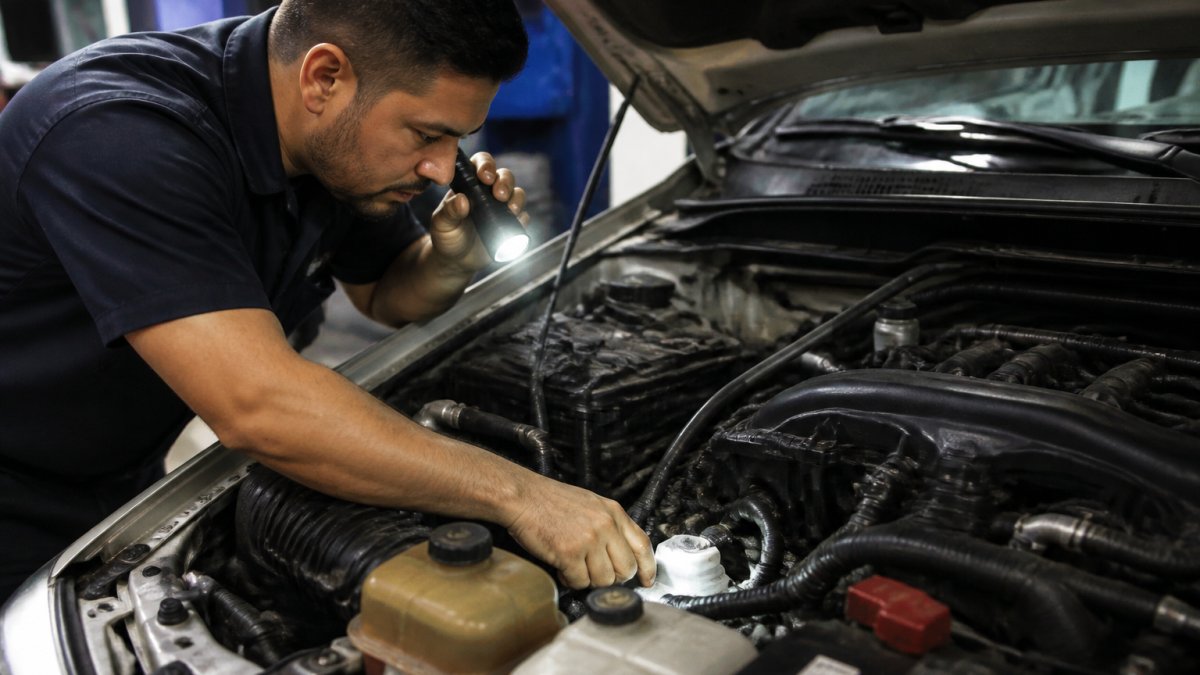
Inspect hoses and belts for cracks, hardness, and fraying.
Check fluid levels when the engine is cold:
- Engine oil should be between the minimum and maximum marks
- Coolant should fill the radiator and overflow tank
- Transmission fluid should be bright red and smell slightly sweet
Dark, burnt-smelling transmission fluid suggests overheating or high mileage; milky coolant indicates a head gasket leak.
Check the battery terminals for corrosion, which reduces electrical power, and the date code to see if the battery is original.
Start the engine and listen: knocking suggests internal engine damage, grinding at startup indicates starter problems, and squealing points to belt or pulley issues.
Used Car Inspection Checklist for Mechanical Systems
Mechanical checks separate a routine used car from a money pit.
Step 1: Cold Start and Idle Check
Ask the seller not to start the vehicle before you arrive. A cold start reveals problems a warm engine hides: lifter tick, blue smoke, rough idle, and slow cranking that points to a weak battery or failing starter.
Listen for the first 30 seconds: a brief tick that fades is often normal, but a persistent knock or rattle that tracks engine speed is not.
Step 2: OBD-II Scan Before the Test Drive
Plug in an OBD-II scanner before you drive and read stored codes and readiness monitors. Codes tell you what the computer flagged; monitors show whether self-tests completed, "not ready" right after a seller cleared codes is a red flag.
Record every code, even pending ones, a P0420 catalyst code is a different negotiation than a P0300 misfire.
Step 3: Fluid and Belt Checks With Objective Criteria
Check fluids when the engine is cold and the vehicle is level:
- Engine oil: Should be between the min and max marks, amber to dark brown. Milky or frothy oil suggests coolant mixing, a head gasket concern.
- Transmission fluid: Should be reddish and translucent. Dark brown or black with a burnt smell indicates overheated fluid and possible internal wear.
- Coolant: Should be clean and the correct color for the vehicle. Rusty or oily coolant signals corrosion or a failing gasket.
Inspect the serpentine belt for glazing, cracks, and fraying. Check hoses for soft spots, bulging, or hardness, squeeze them; they should feel firm but pliable.
Step 4: Brake and Suspension Measurements
Visual brake checks are not enough. Use a lift or a flashlight through the wheel spokes and measure pad thickness: new pads are typically 10-12 mm, and anything under 3 mm needs replacement soon.
For suspension, do the bounce test at each corner, one rebound and settle is normal, continued bouncing suggests worn struts or shocks. Cupped or unevenly worn tires also point to worn shocks or alignment problems.
Step 5: The Test Drive Protocol
Drive the vehicle and check these behaviors: Check these behaviors:
- Transmission: Shifts should be smooth and decisive. Hesitation, slipping, or a hard clunk when engaging drive or reverse warrants a professional scan.
- Steering: Should track straight with no wander or excessive play. Clicking during tight turns points to CV joints.
- Braking: Should be firm without pulsing or pulling. Grinding means metal-on-metal contact.
Step 6: Prioritize What You Found
Not every finding is equal. Sort results into three buckets:
- Safety deal-breakers: Frame damage, brake failure signs, steering play, structural rust, or a salvage title. Walk away.
- Negotiation items: Worn tires, due brakes, a check engine light with a known cause, or a failing battery. Price the repair and subtract it from your offer.
- Routine maintenance: Fluid changes, filters, wiper blades, and belts. Factor these into your ownership budget but do not treat them as deal-breakers.
Vehicle-Type Considerations
- Hybrids and EVs: Ask for a battery state-of-health report from a dealer or specialist. Check for charging faults, reduced range claims, and cooling system service records.
- All-wheel-drive vehicles: Mismatched tire circumference can damage the drivetrain. Measure all four tires and confirm they are within a close tolerance.
- Older vehicles: Rust and deferred maintenance matter more than cosmetic wear. Check service records for timing belt intervals and fluid changes.
If the seller refuses a cold start, an OBD-II scan, or an independent inspection, treat that as a finding in itself.
Identifying Used Car Red Flags and Safety Concerns
Red flags matter only if you know what to do with them. This section gives you a decision framework, the paperwork and history checks that catch problems before you drive, and the logistics of arranging an independent inspection.
The Three-Tier Decision Framework
Sort every finding into one of three tiers before you negotiate:
- Tier 1, Walk away: Frame damage, flood or water intrusion, salvage or rebuilt title, mismatched VINs, structural rust in load-bearing areas, or evidence of odometer tampering.
- Tier 2, Negotiate or repair: A check engine light with a known cause, worn brakes or tires, a failing battery, minor leaks, or cosmetic accident repair. Get a written estimate and subtract it from your offer.
- Tier 3, Budget for it: Fluid changes, filters, belts, wiper blades, and minor wear items. These are normal ownership costs, not deal-breakers.
Paperwork and History Checks First
Before you touch the car, verify the paperwork:
- Title: Confirm the title is clean and in the seller's name. A salvage or rebuilt title means the vehicle was declared a total loss by an insurer.
- VIN match: Check the VIN on the dashboard, driver's door jamb, and title. Mismatches suggest stolen or rebuilt vehicles.
- Odometer: Compare the mileage on the title, service records, and odometer. Inconsistent mileage is a serious red flag.
Run a vehicle history report and read it critically. Accident records, flood claims, and title brands are the highest-value entries; a clean report only reflects reported events, not a guarantee.
Physical Red Flags That Warrant a Professional Inspection
Some findings are beyond a visual check. Call in a professional if you see any of these:
- Fluid leaks under the vehicle, even small drips can indicate seal or gasket failure.
- A check engine light that is on or was recently cleared, readiness monitors will reveal a recent reset.
- White, blue, or black exhaust smoke, each points to a different internal engine concern.
Inspection Logistics and Seller Cooperation
Arrange an independent inspection before you negotiate price. Ask the seller to:
- Leave the vehicle cold so the inspection starts from a true cold start.
- Provide access to a lift or allow the inspector to use one.
- Share service records and the title for verification.
If the seller refuses any of these requests, treat the refusal as a red flag.
What a Professional Inspection Report Should Include
- Photos of every defect and the areas inspected.
- Diagnostic codes with freeze-frame data and readiness monitor status.
- Measured values for tire tread, brake pad thickness, battery health, and fluid condition.
- A prioritized repair list separating safety items, near-term repairs, and routine maintenance.
Model-Specific and Vehicle-Type Checks
Some red flags are specific to the vehicle type:
- Hybrids and EVs: Request a battery state-of-health report. Check for charging faults, reduced range, and cooling system service.
- All-wheel-drive vehicles: Mismatched tire circumference can damage the drivetrain. Measure all four tires.
- Older vehicles: Rust and deferred maintenance matter more than cosmetic wear. Check timing belt intervals and fluid service records.
- Vehicles with known model issues: Search for common problems for that make, model, and year before you inspect. A known transmission or engine issue changes what you look for.
When to Use a Used Car Diagnostic Scan
A diagnostic scan reads the vehicle's computer for diagnostic information.
Use a diagnostic scan when:
- The check engine light is on
- You notice performance issues during the test drive
- The vehicle has high mileage and you want a complete assessment
- You're concerned about hidden mechanical problems
A professional technician can perform a diagnostic scan and explain the results.
The diagnostic scan report becomes your negotiation tool. If the scan reveals needed repairs, you can ask the seller to reduce the price or make the repairs before you take ownership.
Many buyers feel uncertain about what they're looking at during an inspection. That's normal. Our ASE-certified technicians can explain repairs and findings.
| Inspection Area | What to Check | Red Flag Signs |
|---|---|---|
| Exterior | Paint, dents, rust, panel gaps | Mismatched paint, deep rust, uneven gaps |
| Tires | Tread depth, wear pattern | Worn tread, uneven wear, cracked wheels |
| Interior | Seats, controls, dashboard lights | Excessive wear, broken features, warning lights |
| Engine Bay | Fluid levels, hoses, leaks | Low fluid, cracked hoses, active leaks |
| Mechanical | Transmission, suspension, steering | Grinding shifts, excessive bounce, steering play |
| Safety | Frame, title, water damage | Flood smell, frame damage, salvage title |
Frequently Asked Questions
What should I check during a pre-purchase inspection?
Focus on exterior condition (dents, rust, paint mismatches), tires and wheels, interior functionality, under-the-hood components (fluids, battery, belts), and mechanical systems (transmission, brakes, suspension). A professional pre-purchase inspection can help you make an informed purchase decision.
What are common red flags when buying a used car?
Watch for mismatched paint indicating prior repairs, rust on body panels or frame, uneven tire wear suggesting alignment issues, fluid leaks under the engine, check engine lights, transmission hesitation, and interior wear that doesn't match mileage. These used car red flags can warrant further investigation.
Should I get a professional mechanic inspection before buying a used car?
Yes. A professional technician can perform diagnostics and explain repair findings.
How much does a pre-purchase inspection cost?
Contact SHEA'S AUTOMOTIVE for a quote tailored to the specific vehicle you're considering.
Getting a pre-purchase inspection before buying a used car removes the guesswork from one of the biggest purchases you'll make. You'll know exactly what you're buying and what repairs lie ahead. Find answers to common questions about inspections and vehicle condition in our FAQ, or contact us to schedule your pre-purchase inspection today. Our team will give you the honest assessment you need to buy with confidence.