 how-to
Traveler's Car Breaks Down: What Should You Do First?
Last Updated: October 27, 2026
Quick Summary
Emergency car repair for travelers starts with safety first, diagnosis second: pull as far off the travel lane as you can, turn on your hazard lights, and get everyone out on the side away from traffic. Then call for help before you inspect anything. Standing near a disabled car on a highway is one of the riskiest things a driver can do.
- Confirm five things before calling: exact location, vehicle make and color, what happened, whether the car is drivable, and who is with you.
- Roadside assistance is not repair coverage, so budget separately for diagnosis, parts, and labor at the shop.
- Read four numbers in your plan: the tow mileage cap, per-incident dollar limit, reimbursement window, and exclusions list.
- Tow the car if there is smoke, a burning smell, fluid pouring out, overheating, or lost oil pressure.
- Ask for a written, itemized estimate and an explanation of the work before authorizing any repairs.
Table of Contents
- What to Do When Your Car Breaks Down on a Trip
- Roadside Assistance for Travelers: What Your Plan Actually Covers
- How to Find a Mobile Mechanic Near Me While Away From Home
- On-Site Repair or Tow: A Decision Tree for Stranded Drivers
- Emergency Car Repair Cost: What Drives the Bill Up or Down
- How to Verify a Shop and Avoid Breakdown Scams
- Getting Emergency Car Repair in Albuquerque Today
- Frequently Asked Questions
What to Do When Your Car Breaks Down on a Trip
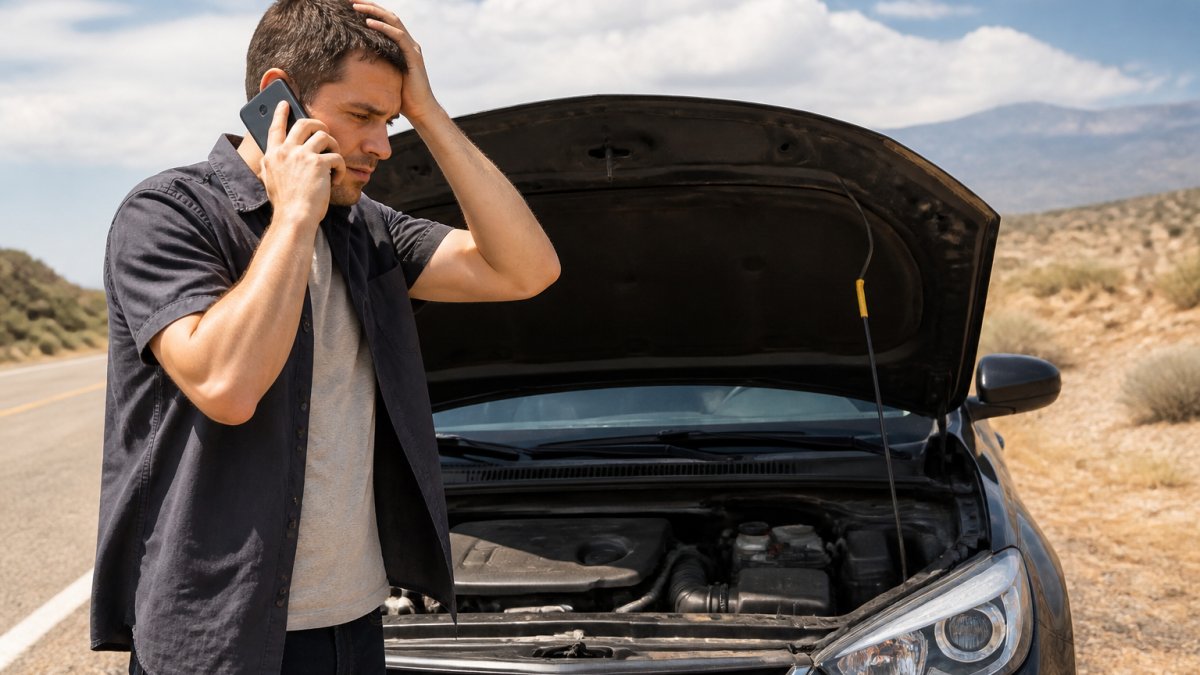
A breakdown on the road is stressful anywhere. Far from home, it feels worse. Emergency car repair for travelers starts with one rule: safety first, diagnosis second.
Get the vehicle as far off the travel lane as you can, turn on the hazard lights, and get everyone out on the side away from traffic. Then call for help. The National Highway Traffic Safety Administration guidance on breakdown safety is blunt about this: standing near a disabled car on a highway is one of the riskiest things a driver can do.
Below, we'll walk through actions to take after a breakdown and how to judge repair versus tow.
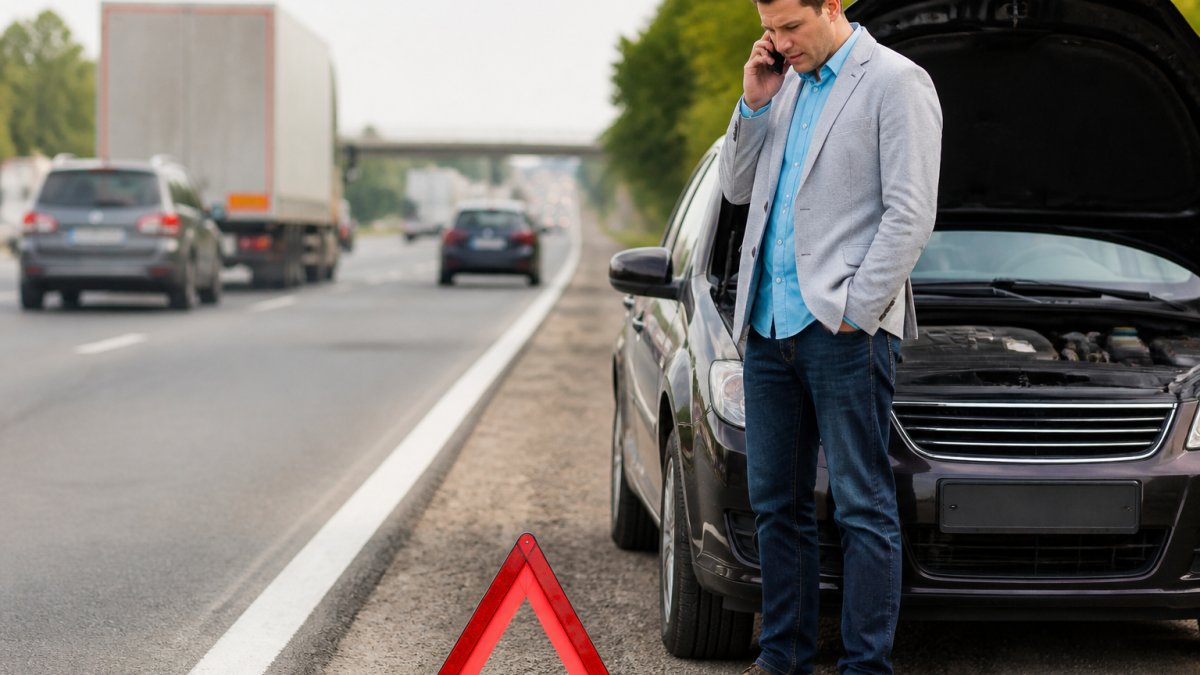
Get Safe Before You Diagnose Anything
The order matters more than the diagnosis. Move first, inspect second.
- Pull as far right as the shoulder allows, wheels straight
- Turn on hazards before you open a door
- Exit on the passenger side if traffic is close
- Set out a warning triangle if you carry one
- Keep everyone behind the guardrail, not beside the car
A common mistake is popping the hood in a live lane to "take a quick look." Whatever the problem is, it can wait ninety seconds while you get clear of traffic.
The Traveler Breakdown Safety Checklist
Before you call anyone, confirm five things. Use this checklist:
- Exact location: highway, exit number, mile marker, or nearest cross street
- Vehicle make, model, and color
- What happened: sound, warning light, smoke, or loss of power
- Whether the car is drivable and whether it is blocking a lane
- Who is with you, including children or pets
Those five answers give the dispatcher information about the situation. Snapshot your location on your phone map and text it to someone you trust.
Roadside Assistance for Travelers: What Your Plan Actually Covers
Roadside assistance for travelers is not the same as repair coverage, and the difference is where most stranded drivers lose money. A plan may dispatch help, but its coverage depends on the plan. Before you assume you're covered, open the plan documents on your phone and read four numbers: the tow mileage cap, the per-incident dollar limit, the reimbursement window, and the exclusions list.
| Coverage Type | Typically Covers | Often Excludes | What to Verify Before You Need It |
|---|---|---|---|
| Roadside plan (auto club or standalone) | Towing to a cap, jump-start, lockout, flat-tire change, fuel delivery | Parts and labor for the repair itself; tows beyond the cap | Tow mileage cap (commonly 5-15 miles), per-incident limit, whether you pay upfront and get reimbursed |
| Auto insurance (towing/roadside endorsement) | Towing, sometimes rental reimbursement | Mechanical repair unless collision-related; off-road incidents | Whether roadside is an optional endorsement, the per-occurrence limit, and the claims phone number |
| Rental car company | Basic roadside dispatch, limited tow | Damage you caused, off-road use, keys locked inside on some tiers | The roadside number on the rental agreement and whether you must call the rental company before any tow |
| Credit card perk | Towing, fuel delivery, lockout | Repairs, larger vehicles, rentals over a set number of days | Whether the perk is primary or secondary and whether you must pay with that card |
The Gap That Catches Travelers
A plan gets your car to a shop. The shop then bills you separately for diagnosis, parts, and labor. Budget for both lines. A common pattern is a driver who assumes "roadside assistance" means "repair covered," approves a tow, and then is surprised by a four-figure repair estimate at an unfamiliar shop.
How to Verify Your Coverage in Five Minutes
Do this before your next long drive, not after a breakdown:
- Find the tow mileage cap. Check whether the plan covers a tow to the shop you need.
- Confirm the per-incident limit. Check the plan documents for the per-incident limit.
- Check the reimbursement model. Check the plan documents to see whether you must pay upfront and file a claim.
- Read the exclusions. Check the plan documents for exclusions.
- Save the dispatch number offline. Screenshot it or write it down. If you're in a weak-signal area, you may not be able to load your plan's app.
Rental Car and Credit Card Coverage: The Fine Print
Check your rental agreement and credit-card benefit terms to see what roadside assistance, towing, and repair coverage they provide.
What to Ask the Dispatcher
When you call, ask three questions and write down the answers: What's the tow mileage cap on my plan? Will you bill the provider directly or will I pay and file? Is the repair itself covered, or only the tow? Those three answers tell you whether you're looking at a dispatch fee or a full repair bill.
How to Find a Mobile Mechanic Near Me While Away From Home
A mobile mechanic near me search works well, but only if you filter hard. A mobile mechanic may be able to assess or repair a vehicle at its location.
Search "mobile mechanic" plus your current town, then check:
- Reviews mention the same type of repair you need
- The shop confirms your make and model over the phone
- They quote a service call and labor rate upfront
- They tell you the response time before you commit
Ask directly: "Can this be fixed on site, or will you tow it?"
On-Site Repair or Tow: A Decision Tree for Stranded Drivers
Use this decision tree to choose between on-site repair and towing:
- Is anyone in danger or is the car blocking a lane? Tow. Safety overrules everything.
- Is it a battery, tire, belt, hose, or fuel issue? On-site repair is often possible.
- Is there smoke, a burning smell, or fluid pouring out? Tow. Do not run the engine.
- Is the car overheating or losing oil pressure? Tow. Driving makes it worse.
- Is the problem unknown and the car undrivable? Tow to a shop for diagnostics.
Repairs That Usually Happen in the Parking Lot
Most roadside fixes fall into a short list: dead battery and jump-start, flat tire and spare swap, lockout assistance, fuel delivery, and simple belt or hose replacement. These are examples of roadside issues drivers may encounter. For deeper advice on catching small issues early, our blog covers the maintenance habits that prevent many of these stops in the first place.
When the Vehicle Should Not Move Another Mile
Some failures are a hard stop. Do not drive if you see:
- Steam or smoke from under the hood
- A red oil pressure or temperature light
- Brake pedal going soft or to the floor
- Fluid pooling under the car
- A tire shredded beyond the spare
Ignoring minor issues is exactly how a small problem becomes a roadside emergency, which is why this breakdown on delayed repairs is worth a read before your next trip.
Emergency Car Repair Cost: What Drives the Bill Up or Down
Emergency repair costs can vary. Ask for an estimate before approving work.
Anatomy of a Roadside Bill
Ask the provider for a written, itemized estimate:
What Pushes the Bill Up
- Remote breakdown location and longer response time
- After-hours, weekend, or holiday dispatch premiums
- Specialty or European parts that must be sourced, adding a day or more
- Diagnostic time on an unknown fault that requires a scan tool
- Towing distance beyond a plan's cap, billed per mile
- A second tow if the first shop can't do the job
What Keeps It Down
- A shop that gives a written, detailed estimate
- Asking for an explanation of the proposed work before approving it
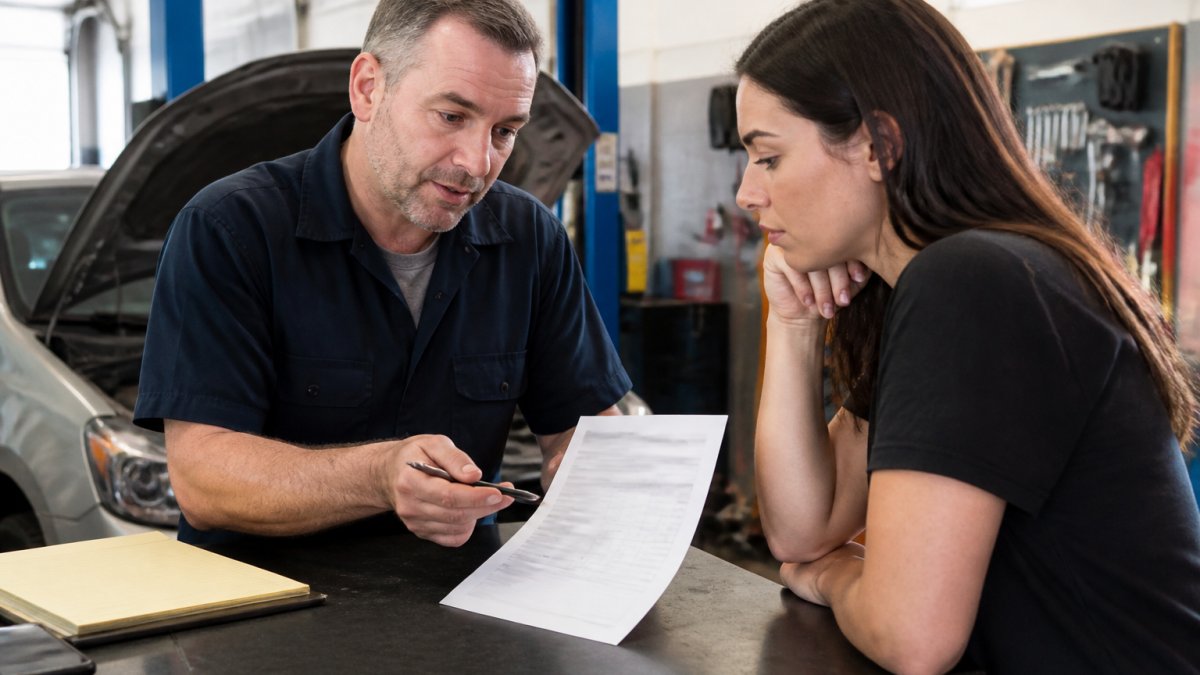
The Estimate Conversation
Ask for a written, detailed estimate and an explanation of the proposed work before authorizing repairs. Consider asking:
- What work is included in the estimate?
- What is the total estimate?
- What should I know before authorizing the work?
Budgeting for the Unknown
Because parts and labor vary by vehicle and region, the practical move is to set aside an emergency repair fund before the trip and confirm your roadside plan's per-incident limit. That way a breakdown is a delay, not a financial shock. Keep every itemized receipt, you'll need them if your plan reimburses rather than pays directly.
How to Verify a Shop and Avoid Breakdown Scams
When choosing a shop after a breakdown, take time to verify the information you receive.
- Confirm the shop's address before authorizing work
- Ask for ASE certification and a written estimate
- Never pay for a repair you didn't approve
- Get the old parts back
- Refuse pressure to sign anything on the spot
Ask the shop to explain the problem and provide a written estimate. Our Frequently Asked Questions cover common repair questions, timelines, and warranties.
Getting Emergency Car Repair in Albuquerque Today
SHEA'S AUTOMOTIVE is a family-owned shop with ASE-certified technicians.
We provide written, detailed estimates. Our team provides automotive maintenance and repair services for individual vehicles and commercial fleets. Get in touch with us.
For travelers who want to prevent the next breakdown, our car care tips are a good place to start before your next long drive.
Frequently Asked Questions
How much does emergency car repair typically cost?
Emergency repair costs can vary. Ask for a written, itemized estimate before authorizing work, and confirm what it includes.
Should I call roadside assistance or a mobile mechanic?
If the car is in a dangerous spot, contact an appropriate roadside assistance provider. Check your roadside plan and describe the symptoms and location when requesting assistance.
How do I find a trustworthy mechanic when I am away from home?
Look for ASE-certified technicians and a physical shop address. Ask for a written estimate before work begins. Shea's Automotive in Albuquerque provides written, detailed estimates.
What should I keep in my car for an unexpected breakdown?
Pack a reflective triangle or flares, a flashlight, jumper cables or a jump box, a tire pressure gauge, a spare tire and jack you have actually tested, basic tools, water, a phone charger, and a printed list of your insurance and roadside-plan numbers. In remote areas, add a blanket, snacks, and extra water. Check the spare's pressure twice a year, since a flat spare turns a five-minute tire change into a tow.
A breakdown far from home tests your patience and your wallet. The right shop makes the difference between a quick fix and a ruined trip. SHEA'S AUTOMOTIVE offers thorough diagnostics, clear explanations of every repair, and same-day attention for travelers who can't afford to wait. Get started with SHEA'S AUTOMOTIVE and get back on the road with confidence.