 how-to
7 Ways to Find a Reliable European Car Mechanic
Last Updated: October 31, 2026
Quick Summary
To find reliable european car mechanics, vet the shop before booking: check ASE certification, read recent reviews for patterns, and confirm it services your make with the right diagnostic tools. A specialist recognizes make-specific faults faster, and a written, itemized estimate lets you compare quotes fairly.
- Check for ASE certification and whether the shop offers detailed, written estimates.
- Ask which makes and model years the shop services most often.
- Confirm the shop uses factory-level or professional scan tools for your make.
- Request an itemized estimate showing labor hours, parts and diagnostic fees.
- Ask the shop to call before performing any work beyond the approved estimate.
Table of Contents
- Why European Cars Need a Specialist Mechanic
- Signs of a Trustworthy Mechanic You Can Check Before Booking
- Checking Make-Specific Experience and Diagnostic Equipment
- Questions to Ask an Auto Mechanic Before You Authorize Work
- How to Compare Auto Repair Estimates Without Overpaying
- Dealer, Independent Shop or Fleet Service: Which Fits Your Car
- Booking Your First Visit to a Trusted European Car Shop
- Frequently Asked Questions
Finding a reliable European car mechanic is harder than finding a reliable mechanic for a domestic car, and the reason is simple: most general shops see BMWs, Audis, Mercedes-Benzes and Volkswagens far less often, so a qualified team of european car mechanics is worth seeking out, since general shops do not always have the scan tools or training to work on these vehicles properly.
Why European Cars Need a Specialist Mechanic
European vehicles are built with different engineering priorities than many domestic models. You can see the European makes this shop covers on its BMW, Audi, Mercedes, VW and Porsche service page.
The practical difference often shows up in diagnosis time, since a specialist who knows a make's common faults can narrow down the cause more quickly. For many owners, that alone justifies a little more research before booking.
Signs of a Trustworthy Mechanic You Can Check Before Booking
Start with the basics before you call. Look for ASE certification, which indicates that technicians have passed standardized tests in specific automotive service areas (ASE Certification Test Series).
Next, read recent reviews. Look for patterns rather than single comments. Repeated praise for clear explanations matters more than a perfect star rating.
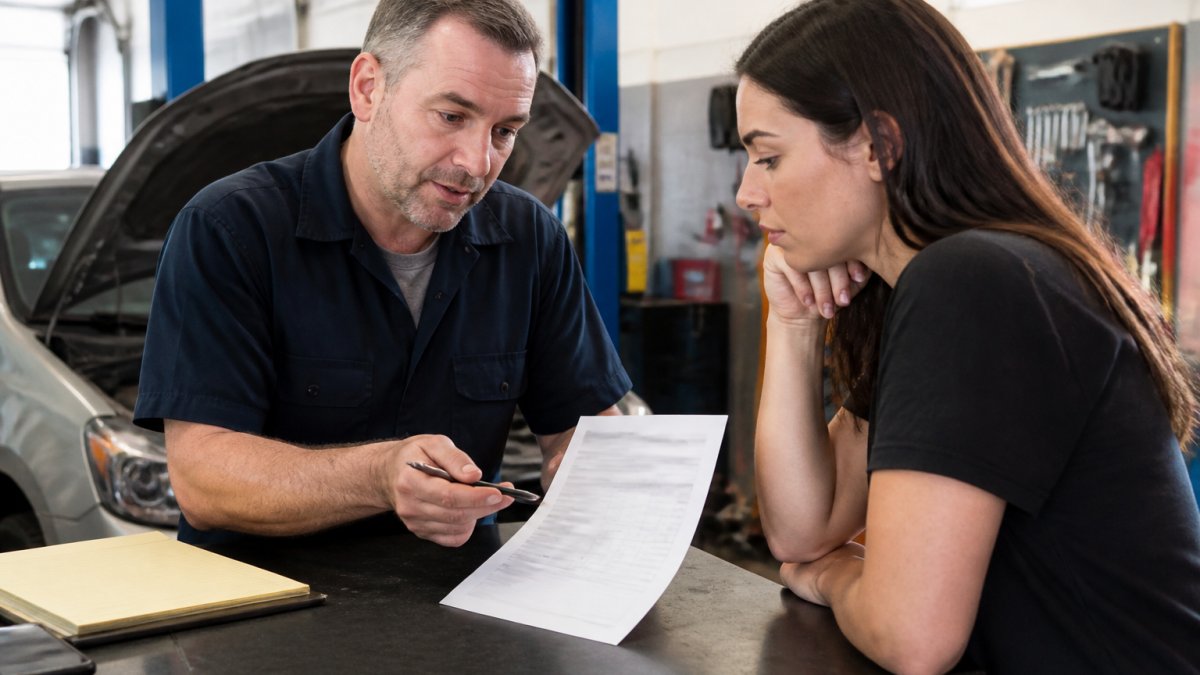
Finally, call and ask how they communicate. A trustworthy shop will explain the problem in plain language and tell you what can wait.
Checking Make-Specific Experience and Diagnostic Equipment
"Do you work on European cars?" is a question almost every shop answers yes to. The useful skill is verifying the answer. Below is how to check make-specific experience and diagnostic capability with evidence rather than assurances.
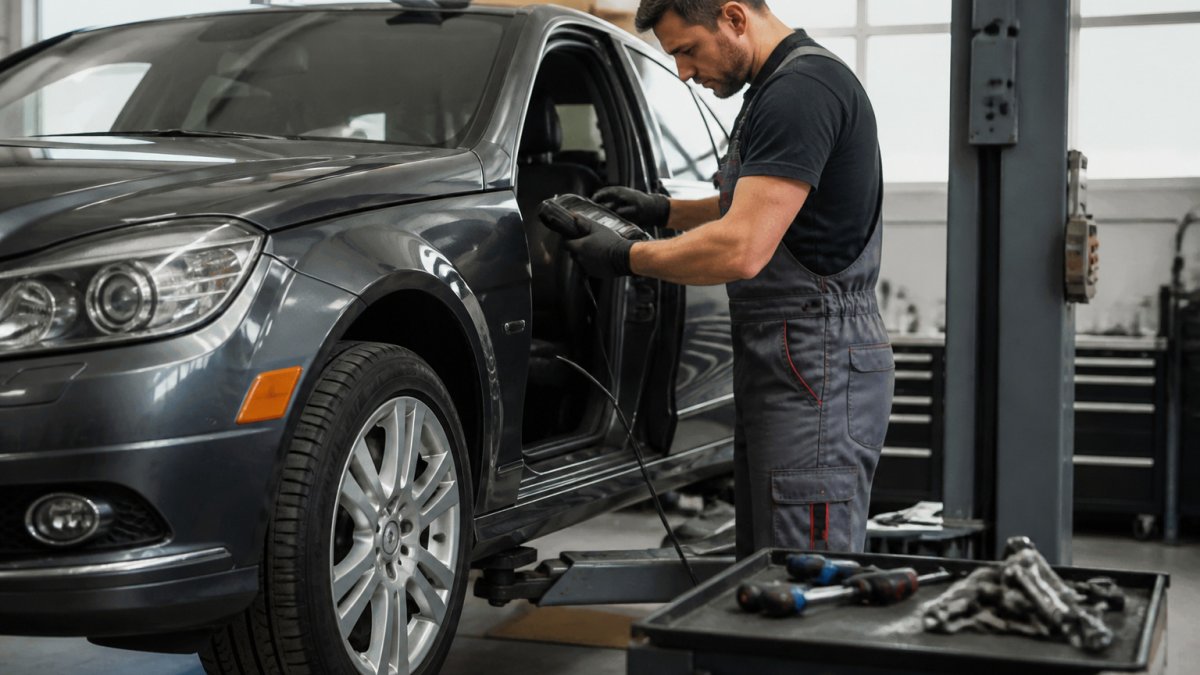
Verify experience with evidence, not claims
Ask for specifics that a general shop cannot easily produce:
- Which makes and model years does the shop service most? A specialist will name the brands and the era it knows best (for example, late-model turbocharged direct-injection engines versus older naturally aspirated models).
- How many of your make does the shop see in a typical month? Volume matters because pattern recognition comes from repetition.
- Can the shop show a recent repair order for a similar job on your make? Redacted invoices are fine; the point is evidence of recent, relevant work.
- Which factory service information does the shop subscribe to? Access to manufacturer service procedures and torque specs is a strong signal; a shop that relies on generic aftermarket data may miss make-specific procedures.
Diagnostic equipment: what actually matters
Many European systems require manufacturer-level or brand-specific scan tools to read all fault codes, perform bidirectional tests, and run calibrations (for example, steering-angle sensor resets, battery registration, and transmission adaptations). A generic OBD-II code reader can pull a code but often cannot command the modules needed to confirm the cause.
Ask these questions and listen for specific answers:
- Which scan platform do you use for my make? Specialists typically name a factory-level tool or a well-known professional platform rather than "a code reader."
- Can you perform bidirectional tests and calibrations on my vehicle? If the shop cannot run an active test on the relevant module, it cannot fully diagnose many modern faults.
- Do you have the software subscriptions current for my model year? Diagnostic software is licensed and updated; an expired subscription limits what the shop can do on newer vehicles.
- What happens if the fault is beyond your tooling? A good shop knows its limits and will say so rather than guess.
A quick pre-booking call checklist
Run through this on the phone before you book:
- Do you service my make and model year regularly?
- Which scan platform and service information do you use for it?
- Can you perform calibrations and bidirectional tests on my vehicle?
- What is the diagnostic fee, and is it credited toward the repair if I approve the work?
A shop that answers these specifically and without hesitation is showing you its process. A shop that answers vaguely is asking you to take its word for it, which is exactly what you are trying to avoid.
The article lists the questions to ask a shop before booking, which can be summarised as follows.
| Question | What a specific answer shows | Red flag |
|---|---|---|
| Which makes and model years do you service most? | Names the brands and era it knows best | Says it works on all makes equally |
| Which scan platform do you use for my make? | Names a factory-level or professional platform | Says it uses "a code reader" |
| Can you perform bidirectional tests and calibrations? | Confirms active tests on the relevant module | Cannot run active tests on modern faults |
| Do your software subscriptions cover my model year? | Confirms current licences for the model year | Subscriptions expired or unclear |
| What happens if the fault is beyond your tooling? | Admits limits and refers the job | Guesses rather than saying so |
Questions to Ask an Auto Mechanic Before You Authorize Work
A short set of questions can reveal a great deal about a shop's approach:
- What do you think is wrong, and how did you confirm it?
- Will you show me the failed part or the measurement that supports the diagnosis?
- Is this repair urgent, or can parts of it wait?
- What parts will you use, and do they carry a warranty?
A good mechanic answers these clearly. Vague answers or reluctance to show evidence should prompt a second opinion.
How to Compare Auto Repair Estimates Without Overpaying
Most ranking pages tell you to "get a second opinion" and stop there. The useful part is knowing what a written estimate should contain and which specific patterns signal padding. Use the following as a repeatable comparison method.
What a complete written estimate looks like
A trustworthy estimate is itemized, not a single lump total. It should show, for each line:
- Complaint or operation, the symptom reported and the repair proposed, stated separately so you can see what is diagnosis and what is repair.
- Labor, hours quoted and the hourly rate, with the labor time tied to a published guide (commonly Mitchell 1 or MOTOR flat-rate times). Ask which guide the shop uses; a shop that cannot name one is guessing.
- Parts, part number, whether it is OEM, OE-equivalent, or aftermarket, and the unit price per part.
- Diagnostic fee, stated up front, and whether it is credited toward the repair if you approve the work.
- Shop supplies and hazardous waste fees, these are normal, but they should be a stated percentage or cap, not a surprise line.
If any of those are missing, ask for a revised estimate before you authorize anything. A shop that resists itemizing is telling you something.
The comparison method
- Normalize the scope. Make sure every shop is quoting the same repair, not a different one. "Replace the water pump" and "replace the water pump and thermostat while the system is open" are different jobs; compare like with like.
- Compare labor hours, not just totals. Flat-rate times for the same operation should be close across shops. A quote with materially more labor hours for the same job usually means either a different repair or padding.
- Compare parts tiers. An OEM part and an aftermarket part for the same component can differ substantially in price. Ask each shop to quote the same tier so the numbers are comparable, then decide whether the OEM premium is worth it for that part.
- Separate diagnosis from repair. A diagnostic fee is for finding the fault; the repair is priced after. Be wary of a shop that quotes a repair before it has confirmed the diagnosis.
- Check the diagnostic-fee credit. Many shops apply the diagnostic fee to the repair if you approve the work. Ask; it changes the effective cost of getting a second opinion.
Warning signs in a quote
- A single total with no breakdown.
- Labor hours well above the flat-rate guide for the same operation.
- A parts list with no part numbers or brand names.
- "While we're in there" add-ons presented as mandatory rather than optional.
- A quote that changes materially between the phone call and the written estimate.
When a second opinion is worth the diagnostic fee
For any repair above a few hundred dollars, a second diagnostic opinion is usually cheaper than an unnecessary repair. The math is simple: one diagnostic fee versus the cost of a repair you did not need. Ask the second shop to confirm the diagnosis independently rather than to critique the first shop's quote, an independent confirmation is stronger evidence than a competing sales pitch.
Dealer, Independent Shop or Fleet Service: Which Fits Your Car
Dealerships offer manufacturer training and tools, but they often carry higher labor rates and may be slower to schedule. An independent specialist can provide similar diagnostic capability at a lower cost for many repairs, especially on vehicles outside the warranty period.
Fleet operators have different needs. For commercial vehicles, match the service provider to how often you need work and how much a delay costs you.
Booking Your First Visit to a Trusted European Car Shop
For a first visit, describe the symptoms as specifically as you can: when the problem happens, any warning lights, and any unusual sounds or smells. Bring any recent repair records. This helps the technician diagnose faster and may reduce diagnostic time.
To book, call Shea's Automotive directly or visit the website to request an appointment. You can also schedule your visit through the Veterans Day free oil change booking page.
Frequently Asked Questions
How do I find a trustworthy European car mechanic?
Start with shops that name the makes they service and show technicians with ASE certification. Read recent reviews for mentions of your specific brand, then call and ask how often they work on it. A good shop will answer plainly, explain what they can diagnose in-house, and tell you if they would refer the job elsewhere. Pick two or three candidates and compare how each handles your questions before you book.
Should I take my European car to a dealer or an independent mechanic?
Dealers have factory training and access to manufacturer software, which matters for complex electronics and warranty work. Independent shops that specialize in European vehicles often cost less per hour and can handle routine maintenance and most common repairs well. If your car is under warranty, the dealer may be required for certain repairs. For older cars outside warranty, a specialist independent with strong reviews and ASE-certified technicians is often the better value.
How can I compare estimates from European car repair shops?
Ask every shop for a written, itemized estimate that lists parts, labor hours and the hourly rate separately. Confirm whether parts are OEM or aftermarket and what warranty covers them. Compare the diagnosis behind each quote, not just the total. If one shop finds extra problems the others did not, ask them to show you the failed part or test result. A second opinion on any repair over several hundred dollars is a reasonable step.
Do European cars need specialized diagnostic equipment?
Many European vehicles use proprietary communication protocols and require manufacturer-level or enhanced scan tools to read certain modules, reset systems and perform calibrations. A generic code reader may show a fault code but miss the underlying cause. When choosing a shop, ask whether they have brand-specific diagnostic software and whether their technicians have used it on your make and model. Shops that can show you live sensor data or test results are generally easier to trust.
If you drive a BMW, Audi, Mercedes-Benz, Volkswagen or Porsche in Albuquerque, bring it to SHEA'S AUTOMOTIVE for diagnostics and repair from specialist technicians who explain each step in plain language.