 blog
Common Issues With European Luxury Cars: A Guide
Table of Contents
- Why European Luxury Cars Face Unique Challenges
- Oil Leaks and Fluid Seepage in European Luxury Vehicles
- Timing Chain and Timing Belt Failures
- Turbocharger Problems and Performance Loss
- European Car Cooling System Problems and Overheating
- European Car Electrical Problems and Sensor Faults
- European Luxury Car Maintenance: Prevention and Long-Term Ownership
- What to Check Before Buying a Used European Luxury Car
- Frequently Asked Questions
Last Updated: October 19, 2026
Why European Luxury Cars Face Unique Challenges
European luxury cars demand specialized attention, precision components, complex electrical systems, and materials requiring specific maintenance protocols. At SHEA'S AUTOMOTIVE, we see how common issues with european luxury cars cluster around a few critical areas.
The real problem isn't that European cars are inherently unreliable. They're built to tighter tolerances, so small problems escalate quickly if ignored, a minor oil leak becomes a major repair, a timing chain rattle becomes catastrophic engine failure.
That's why understanding common issues with European luxury cars before they happen matters, prevention saves money and time.
Oil Leaks and Fluid Seepage in European Luxury Vehicles
Oil leaks are the most frequent complaint we hear from European car owners. These vehicles use multiple gaskets and seals that degrade over time, especially in older models or those with higher mileage.
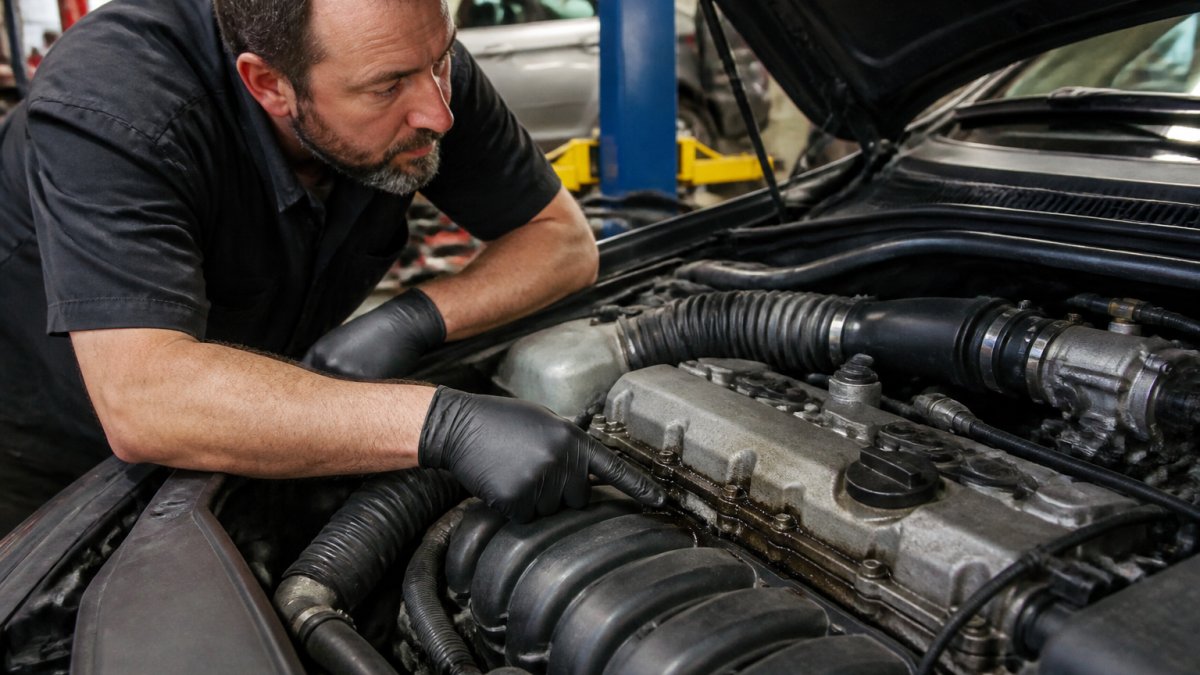
Tighter engine compartments accelerate heat buildup and gasket breakdown, a gasket lasting 100,000 miles in a domestic car could fail at 80,000 in a European import.
Leaks aren't always obvious at first, a slight burning smell or a small overnight puddle. By the time the leak is visible, damage is already spreading.
Common leak locations:
- Valve cover gaskets (most frequent)
- Power steering fluid lines
- Transmission pan seals
- Engine oil pan gaskets
- Coolant hose connections
The fix depends on which seal leaks and how accessible it is, some take hours, others require removing major engine components.
Timing Chain and Timing Belt Failures
Timing chain and belt failures sneak up on owners.
European luxury cars use different timing systems depending on the model and generation. Some use chains, others use belts.
Warning signs are subtle: a cold-start rattle from the front of the engine, or a flickering check engine light. Some owners notice nothing until failure.
Why European cars are vulnerable:
- Complex multi-cam designs put stress on timing systems
- Stretched chains can skip teeth, throwing off valve timing
- Worn belts fray silently before they snap
- Replacement requires extensive labor on many models
Prevention is straightforward: follow the manufacturer's schedule. Replace belts at the recommended interval even if they look fine, and keep chains lubricated with regular oil changes.
If you're buying a used European luxury car, ask for service records showing timing work.
Turbocharger Problems and Performance Loss
Turbochargers are standard on modern European luxury cars, adding complexity and failure points, and failure modes differ sharply by engine family.
Turbo problems usually manifest as power loss or a whining noise that grows louder under acceleration, often the turbo struggling to spool up.
Where the failures cluster by engine family:
- Inline-six and V8 turbo engines (common in mid-size and full-size luxury sedans and SUVs): wastegate actuator rattle, charge-pipe leaks at the intercooler connections, and oil seepage at the turbo feed and return lines. Charge-pipe leaks often set a boost-deviation fault code before the driver feels anything.
- Turbocharged four-cylinders (common in compact and mid-size models): carbon buildup on the turbine and intake valves, diverter-valve diaphragm tears, and PCV-related crankcase pressure problems that push oil past the turbo seals.
- Twin-turbo V-configurations: bank-to-bank imbalance faults, where one turbo lags the other; often traced to a sticking wastegate or a failed boost-control solenoid rather than the turbo itself.
- Variable-turbine-geometry (VGT) turbos: sticking vanes from soot accumulation, producing overboost or underboost codes and a noticeable flat spot under light throttle.
The most common issue is carbon buildup on turbine blades and the intake tract.
Bearing wear is another problem. Turbos spin well over 100,000 RPM, and bearings wear out if oil changes are delayed or the wrong viscosity is used.
Turbo failure warning signs and what they usually mean:
- Reduced acceleration or power loss, often a boost leak or stuck wastegate before the turbo itself fails
- Whining or whistling under load, early bearing or compressor-wheel contact; address promptly
- Rough idle or stalling, can indicate a diverter valve or PCV fault rather than turbo failure
- Blue smoke from the exhaust, oil passing the turbo seals; check crankcase ventilation first
- Black smoke under load, over-fueling or a boost leak confusing the air-mass calculation
- Check engine light with boost-deviation or underboost codes, diagnose before replacing parts
Severity triage:
- Monitor: faint whistle with no power loss and no fault codes, schedule a diagnostic scan at the next service.
- Address within weeks: boost-deviation codes, intermittent power loss, or oil residue at the charge pipes.
- Stop driving: blue smoke plus a dropping oil level, or a metallic rattle under boost, continued driving can send debris into the engine.
Diagnosis before replacement: A proper diagnosis includes a boost-leak test, a scan for boost-deviation and wastegate faults, an oil-feed-line check for coking, and a charge-pipe inspection.
European Car Cooling System Problems and Overheating
Cooling system failures happen fast, an overheating engine can suffer permanent damage in minutes.
European cars use aluminum radiators and complex cooling circuits, efficient but sensitive. A failing thermostat, weak water pump, or clogged radiator can push temperatures into the danger zone quickly.
Common cooling system failures:
- Thermostat stuck closed (engine overheats)
- Water pump bearing failure (coolant leaks)
- Radiator corrosion or clogging (reduced cooling)
- Coolant hose deterioration (leaks)
- Expansion tank cracks (slow coolant loss)
Prevention means regular coolant flushes and inspections, European cars often need coolant changes every 30,000 to 50,000 miles, depending on model. Use the correct coolant type; the wrong one causes internal corrosion.
If the temperature gauge climbs, pull over safely, let the engine cool, and check coolant levels. Continuing to drive risks catastrophic engine damage.
European Car Electrical Problems and Sensor Faults
European luxury cars rely heavily on electronic systems. Electrical problems can be maddening because symptoms are vague and diagnosis requires specialized equipment.
The most common electrical gremlins are oxygen sensor failures, mass airflow sensor problems, and ignition coil issues, which fail gradually or suddenly depending on the component and driving conditions.
Electrical problems we see frequently:
- Oxygen sensors giving false readings
- Ignition coils failing (causing misfires)
- ABS sensor faults triggering warning lights
- Battery drain from faulty modules
- Alternator output dropping below spec
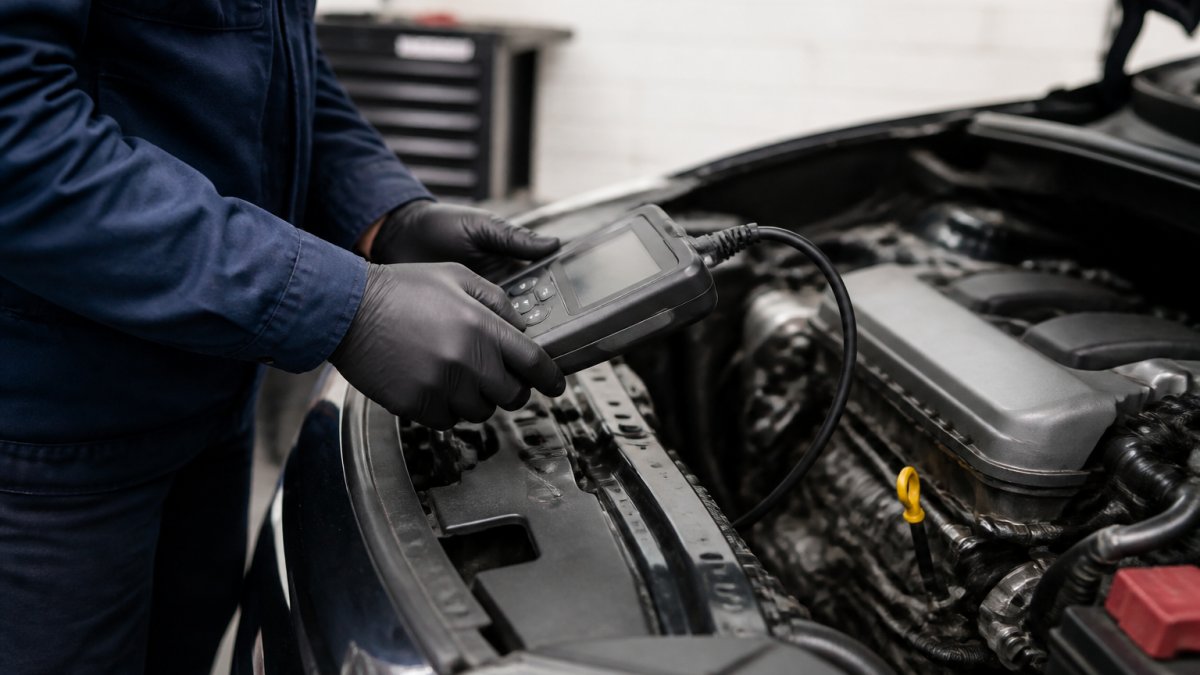
Diagnosing electrical problems requires a scanner that understands European diagnostic protocols. Not all shops have the right equipment. This is where specialized expertise matters.
The fix depends on the fault: a sensor replacement might be straightforward, a module reprogramming might be necessary, and some issues require replacing entire control units.
European Luxury Car Maintenance: Prevention and Long-Term Ownership
The best strategy for European car ownership is prevention through consistent maintenance. It's the difference between a reliable vehicle and constant repairs.
Follow the manufacturer's maintenance schedule exactly. European cars are engineered to specific intervals. Skipping or delaying service creates problems downstream.
Essential maintenance tasks:
- Oil changes with quality synthetic oil at recommended intervals
- Fluid level checks monthly (oil, coolant, brake fluid, power steering)
- Brake inspections annually
- Tire rotations every 6,000 to 8,000 miles
- Air filter replacements as specified
- Coolant flushes at manufacturer intervals
- Transmission fluid service according to schedule
Use quality parts.
Find a shop experienced with your specific brand. European cars differ significantly. A shop that knows Audi's systems might not know BMW's architecture.
Keep detailed service records. Buyers want proof of maintenance at resale, and good records help your shop understand what's been done and what's coming due.
What to Check Before Buying a Used European Luxury Car
If you're considering a used European luxury car, a pre-purchase inspection is essential, these vehicles hide problems well, and by the time symptoms appear, significant damage may already be present.
What a proper pre-purchase inspection covers:
- Full computer diagnostic scan across all modules (engine, transmission, ABS, airbag, body, and comfort modules), not just the check-engine light
- Engine compression or cylinder-leakage test to reveal internal wear
- Fluid condition analysis (engine oil, coolant, transmission fluid, brake fluid, differential fluid)
- Visual inspection of all major components, including underbody and subframe
- Test drive under various conditions (cold start, highway, stop-and-go)
- Review of service records and maintenance history
Model- and generation-specific checks that matter most:
- Timing system: Confirm whether the engine uses a belt or chain, and whether the belt or chain, tensioner, and guides have been serviced. On chain-driven engines, listen for a cold-start rattle and check for timing-related fault codes; on belt-driven engines, verify the belt was replaced at the recommended interval.
- Turbo and boost system: On turbocharged engines, check for boost-deviation codes, inspect charge pipes and intercooler connections for oil residue, and confirm the oil feed line shows no signs of coking.
- Cooling system: Look for coolant residue at the expansion tank, water-pump weep hole, and hose connections; confirm the correct coolant type was used, since mixing coolant types accelerates corrosion in aluminum systems.
- Direct-injection carbon: On direct-injection engines, ask whether intake-valve carbon cleaning has been done; a rough idle or slight misfire at cold start can indicate buildup.
- Electrical and module health: Scan for stored and pending fault codes in every module, check battery health and charging voltage, and look for signs of water intrusion in footwells and trunk wells, which can damage control modules.
- Suspension and bushings: On heavier luxury models, inspect control-arm bushings, air-suspension components (if equipped), and adaptive-damper function; air-suspension faults are a common and costly used-car surprise.
- Transmission: Confirm the transmission fluid service history, check for harsh or delayed shifts during the test drive, and scan the transmission module for adaptation or fault codes.
Questions to ask about the car's history:
- Has the timing belt or chain, tensioner, and water pump been serviced, and at what mileage?
- When was the last major service, and can the records be produced?
- Have there been any recurring fault codes or repeat repairs?
- Has the car been driven mostly on short trips (which accelerates carbon and oil-sludge issues) or on the highway?
- Are there any known issues the owner is aware of?
Reading the service records: Gaps in maintenance are red flags. A car with sporadic service history is riskier than one with consistent maintenance.
Signs of previous repairs: Mismatched paint, new hoses, or fresh gaskets suggest recent work. Sometimes that's good (problems were addressed); sometimes the shop was just patching symptoms.
Budget for repairs in your purchase decision: Even a well-maintained used European luxury car might need work soon, timing service, cooling system service, carbon cleaning, or sensor replacement.
Frequently Asked Questions
What are the most common issues with European luxury cars?
European luxury cars frequently experience oil leaks from valve covers and power steering systems, timing chain failures due to carbon buildup, turbocharger problems from high performance demands, cooling system failures, and electrical faults. These issues stem from complex engineering, tight tolerances, and the high-performance nature of these vehicles. Regular maintenance and prompt diagnosis can prevent many of these problems from becoming catastrophic.
Why does European luxury car maintenance cost more than other vehicles?
European luxury cars require specialized diagnostic tools, qualified technicians trained on their specific systems, and often more expensive parts. Their complex engines, precision engineering, and integrated electronic systems demand expertise beyond standard repair shops. Additionally, many European cars use timing chains that require engine removal for service, and turbochargers need premium oil and careful maintenance to avoid premature failure.
How can I prevent common European car cooling system problems?
Follow the manufacturer's scheduled maintenance intervals for coolant flushes and inspections. Use only the specified coolant type for your vehicle, as European cars often require specific formulations. Monitor coolant levels regularly and watch for warning signs like overheating, steam from the engine, or sweet-smelling coolant. Have the thermostat and water pump inspected during routine service, and address any leaks immediately before they cause engine damage.
What should I look for when buying a used European luxury car?
Request a comprehensive pre-purchase inspection focusing on oil seepage around the engine, timing chain condition, turbocharger operation, and electrical system diagnostics. Check service records for consistent maintenance intervals and fluid changes. Have a qualified technician test all electronic systems, sensors, and warning lights. Listen for engine knocking or rough idling that suggests carbon buildup or ignition coil problems. A thorough inspection can reveal hidden issues before you commit to ownership.