 blog
Car Diagnostic Test Near Me: What to Expect
Table of Contents
- What a Car Diagnostic Test Reveals
- Understanding Check Engine Light Diagnosis
- How Vehicle Diagnostics Identify Problems
- Car Diagnostic Test Duration: What to Expect
- Free Car Diagnostic Test vs. Professional Diagnosis
- Car Diagnostic Test Cost and What's Included
- Choosing a Trustworthy Local Diagnostic Provider
- Common Reasons to Schedule a Diagnostic Test
- Frequently Asked Questions
Last Updated: October 18, 2026
What a Car Diagnostic Test Reveals
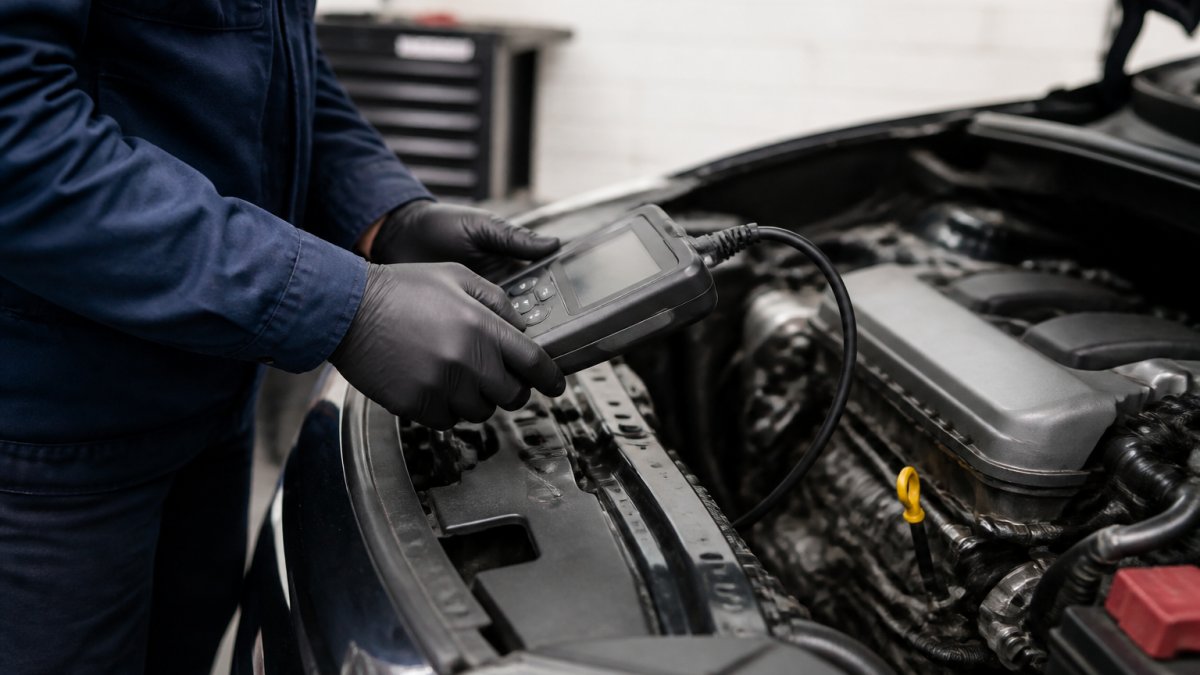
A car diagnostic test is a comprehensive electronic scan that identifies problems in your vehicle's engine, transmission, emissions system, and other critical components. When you bring your car to a repair shop, a technician connects a diagnostic scan tool to your vehicle's onboard diagnostics port and reads the trouble codes stored in your engine control module.
At SHEA'S AUTOMOTIVE, we use professional-grade diagnostic equipment to uncover issues before they become expensive repairs. The test takes 30-60 minutes on average and provides a detailed report of every fault code your vehicle has recorded. This transparency matters because it protects you from unnecessary work and helps you understand exactly what needs fixing.
Your vehicle's computer continuously monitors dozens of sensors and systems. When something falls outside normal operating parameters, the engine control module logs a fault code and often triggers your check engine light. A diagnostic test retrieves those codes and translates them into actionable information. You learn whether the problem is serious (requiring immediate attention) or minor (something you can address at your next service appointment).
Understanding Check Engine Light Diagnosis
Your check engine light is your vehicle's way of communicating that the onboard diagnostics system has detected a problem. When that light comes on, many drivers panic, but the light itself doesn't tell you whether the issue is urgent or routine. A check engine light diagnosis requires a scan to reveal the underlying fault code.
Some check engine lights indicate serious problems like a misfire that could damage your catalytic converter. Others flag minor issues like a loose gas cap or a sensor reading slightly out of range. Without a diagnostic scan, you're driving blind. You might ignore a critical problem or rush to repair something minor.
The diagnostic tool reads the specific trouble code and provides context about which vehicle system triggered the warning. Is it your emissions system? Your transmission? Your fuel delivery? The code tells the story. At SHEA'S AUTOMOTIVE, we've helped countless customers understand their check engine light instead of just resetting it and hoping the problem disappears.
How Vehicle Diagnostics Identify Problems
Vehicle diagnostics work by communicating with your engine control module, the computer that manages engine performance, emissions, and transmission operation. When a sensor detects a reading outside acceptable ranges, the module logs a trouble code. The diagnostic scan tool retrieves these codes and displays them as a list of specific problems.
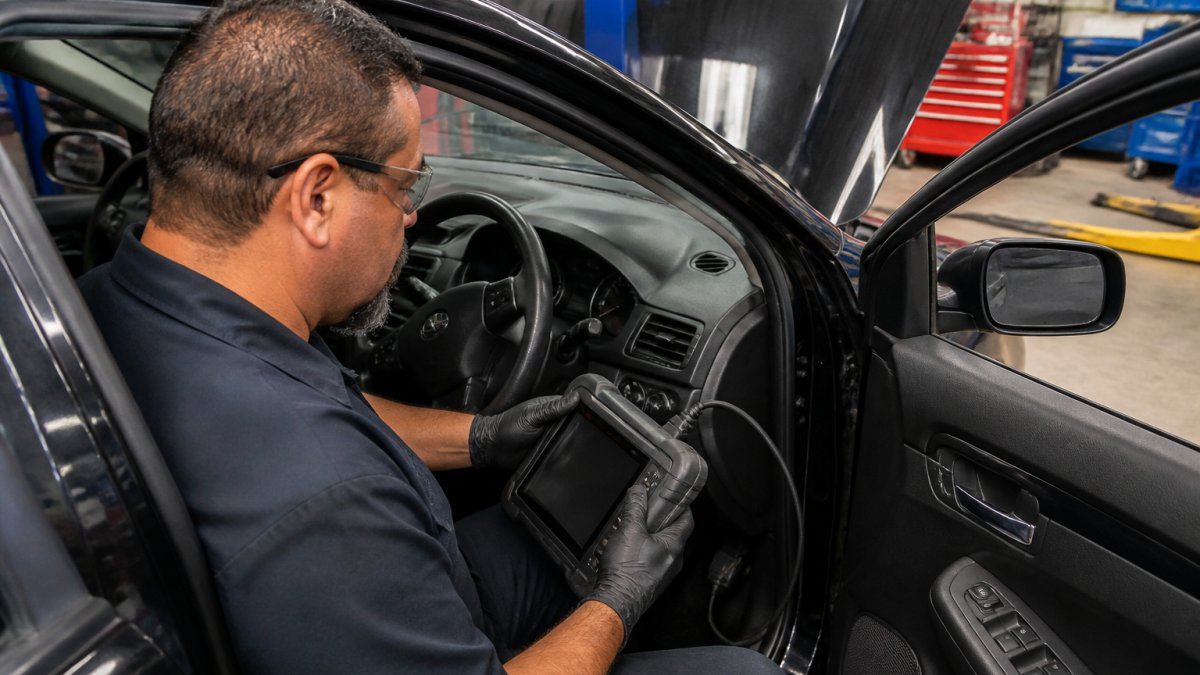
OBD-II Code Scan and Fault Code Reading
The OBD-II code scan is the standard diagnostic method used on vehicles manufactured after 1996. OBD-II stands for On-Board Diagnostics, Second Generation, a federally mandated system that standardizes how vehicles report problems.
Each trouble code is a five-character alphanumeric identifier. The first character tells you the code category (P = powertrain, C = chassis, B = body, U = undefined). The remaining characters specify exactly which system or component has an issue. For example, a P0301 code means a cylinder misfire has been detected. A P0420 code indicates a catalytic converter efficiency problem.
A free code scan can tell you what codes are stored, but it won't tell you why those codes are present or what repair is needed. This is where professional diagnosis becomes essential. Our ASE-certified technicians at SHEA'S AUTOMOTIVE interpret the codes in context, we perform additional testing to confirm the root cause before recommending repairs.
Vehicle Systems Tested During Inspection
A complete diagnostic test examines multiple vehicle systems. Your engine control module monitors oxygen sensors, fuel injectors, ignition timing, idle speed, and dozens of other parameters. The ABS system (anti-lock braking system) has its own diagnostic capabilities, as does your transmission, electrical system, and emissions equipment.
During a thorough diagnostic inspection, a technician checks:
- Engine performance sensors and fuel delivery systems
- Transmission fluid condition and shift quality
- ABS system function and wheel speed sensors
- Electrical system voltage and battery health
- Emissions equipment including oxygen sensors and catalytic converter efficiency
- Cooling system operation and temperature sensors
- Power steering and suspension components
Not every diagnostic test examines all systems, the scope depends on your symptoms and the codes present. If your check engine light is on, we focus on the powertrain system. If you're experiencing brake warning lights, we diagnose the ABS system. A targeted approach saves time and keeps your cost reasonable.
Car Diagnostic Test Duration: What to Expect
A standard car diagnostic test typically takes 30-60 minutes. The scan itself, connecting the tool and reading codes, takes less than a minute. The remaining time involves visual inspection, additional testing to confirm the root cause, and documentation of findings.
If your vehicle has multiple fault codes or complex symptoms, diagnosis may take longer. A transmission problem that requires road testing might extend the appointment to 90 minutes. A simple check engine light scan with clear codes might finish in 30 minutes. The technician will give you a realistic timeframe when you call or arrive.
At SHEA'S AUTOMOTIVE, we understand that your time matters. We perform diagnostics efficiently without rushing through the process. Accuracy matters more than speed, a thorough diagnosis prevents unnecessary repairs and ensures you understand what's actually wrong.
Free Car Diagnostic Test vs. Professional Diagnosis
Many shops advertise free diagnostic scans. These free scans retrieve trouble codes and identify which systems have problems. They answer the basic question: "What code is stored?" But a free scan doesn't answer the critical question: "Why is that code present, and what repair is needed?"
A free car diagnostic test pulls codes from your vehicle's computer. A professional diagnosis goes deeper. Our technicians perform visual inspections, test sensors with a multimeter, check fluid conditions, perform road tests, and use advanced diagnostic equipment to pinpoint root causes.
Free scans are useful for identifying obvious problems, but they often miss the real issue. For example, a P0171 code (system too lean) could result from a faulty oxygen sensor, a fuel pump problem, a vacuum leak, or a sensor wiring issue. A free scan won't distinguish between these causes.
The limits of free code scans are significant. You get information, but not the expertise to act on it safely. At SHEA'S AUTOMOTIVE, we charge for professional diagnosis because we're providing knowledge, not just data retrieval. That knowledge protects you from expensive mistakes.
Car Diagnostic Test Cost and What's Included
Diagnostic pricing depends on the complexity of your vehicle's symptoms and the systems involved. Rather than guessing at costs, contact SHEA'S AUTOMOTIVE directly for a current quote tailored to your specific situation. Our team can discuss your vehicle's symptoms and provide accurate pricing.
When you pay for a professional diagnostic, you're paying for:
- Complete scan of all vehicle systems
- Visual inspection of relevant components
- Additional testing (sensor readings, fluid analysis, electrical checks) to confirm root causes
- A written report explaining findings
- Repair recommendations with estimated costs
- Technician expertise and ASE certification
A comprehensive diagnostic report protects you. It documents what we found, what's causing the problem, and what repair options exist. You have proof of the diagnosis and can make informed decisions about repairs. This transparency is what separates a trustworthy shop from one that might recommend unnecessary work.
Choosing a Trustworthy Local Diagnostic Provider
Finding a reliable diagnostic provider matters because your diagnosis determines your repair path. A poor diagnosis leads to unnecessary repairs or missed problems that cause breakdowns later. Here's how to evaluate local options:
Look for ASE certification. ASE-certified technicians have passed rigorous exams and maintain current knowledge of automotive systems (Work Experience Requirements). This certification signals that a shop prioritizes quality and professional standards. SHEA'S AUTOMOTIVE employs ASE-certified technicians who stay current with evolving vehicle technology.
Ask about their diagnostic equipment. Professional-grade scan tools cost thousands of dollars and require technician training. Shops using outdated or generic code readers provide less accurate diagnostics. Ask what equipment they use and how current it is.
Request a written estimate. Any shop worth trusting will provide a written diagnostic report explaining what they found, why it matters, and what repair is recommended. Verbal estimates or vague explanations are red flags.
Check for transparency about repair recommendations. A trustworthy shop explains why a repair is necessary, not just that it is. They answer your questions and don't pressure you into work you're unsure about.
Verify their experience with your vehicle type. If you drive a European car, confirm the shop has experience with your specific make and model. Specialized knowledge matters. SHEA'S AUTOMOTIVE serves European car owners and understands their unique diagnostic requirements.
Read customer reviews. Look for patterns in what customers say. Do they mention clear communication? Honest diagnosis? Fair pricing? Shops with consistently positive feedback about transparency and integrity are your safest bet.
Common Reasons to Schedule a Diagnostic Test
You should schedule a diagnostic test when you experience warning lights, unusual sounds, performance changes, or symptoms that suggest a problem. Here are the most common reasons customers visit us:
Check engine light. This is the most common reason. The light indicates your engine control module has detected a problem. Don't ignore it, get it scanned.
Warning lights for ABS, transmission, or electrical systems. Any warning light deserves investigation. Early detection prevents expensive damage.
Poor fuel economy. A sudden drop in miles per gallon often indicates a sensor malfunction or fuel system problem. Diagnostics identify the cause.
Unusual sounds or vibrations. While some issues require hands-on inspection, many sound-related problems trace back to sensor faults or computer-controlled systems. Diagnostics help narrow down the source.
Pre-purchase inspection for used vehicles. Before buying a used car, a diagnostic scan reveals hidden problems the seller didn't disclose.
Preparing for emissions testing. If your vehicle failed an emissions test, diagnostics reveal what's causing the problem so repairs can be targeted and effective.
Fleet maintenance and downtime reduction. Commercial fleet operators depend on diagnostics to identify problems quickly and minimize vehicle downtime.
When your vehicle needs answers, a professional diagnostic test provides clarity. SHEA'S AUTOMOTIVE offers comprehensive diagnostics with ASE-certified technicians who explain findings clearly and recommend only necessary repairs.
Frequently Asked Questions
How long does a car diagnostic test take?
A standard car diagnostic test typically takes 30-60 minutes, depending on the vehicle's complexity and the diagnostic tool being used. Simple code scans may complete in less than a minute, but a thorough inspection of vehicle systems and a professional diagnosis usually requires more time. ASE-certified technicians will review onboard diagnostics data, perform a system inspection, and provide a detailed repair recommendation.
What is the difference between a free code scan and a professional car diagnostic test?
A free code scan reads trouble codes from your vehicle's computer but doesn't identify the underlying problem. A professional car diagnostic test goes deeper, examining the engine control module, ABS system, transmission system, electrical system, and other components to determine the root cause. Free scans can point you toward an issue, but only a certified technician can provide an accurate diagnosis and repair estimate.
How much does a car diagnostic test cost?
Car diagnostic test cost depends on the complexity of your vehicle, the systems being tested, and the provider. Contact SHEA'S AUTOMOTIVE for a transparent quote and detailed estimate. Many providers charge a diagnostic fee that may be credited toward repair costs if you proceed with their recommended work. Always ask what the fee includes before scheduling.
Can I drive my car if the check engine light is on?
In most cases, yes, a check engine light indicates a malfunction detected by your vehicle's onboard diagnostics system, but it doesn't always mean immediate danger. However, you should schedule a diagnostic test soon to identify the underlying problem. If the light is flashing or accompanied by severe symptoms like loss of power, have the vehicle towed to a certified technician rather than driving it.